


墨子纪念馆Mozi Museum
··
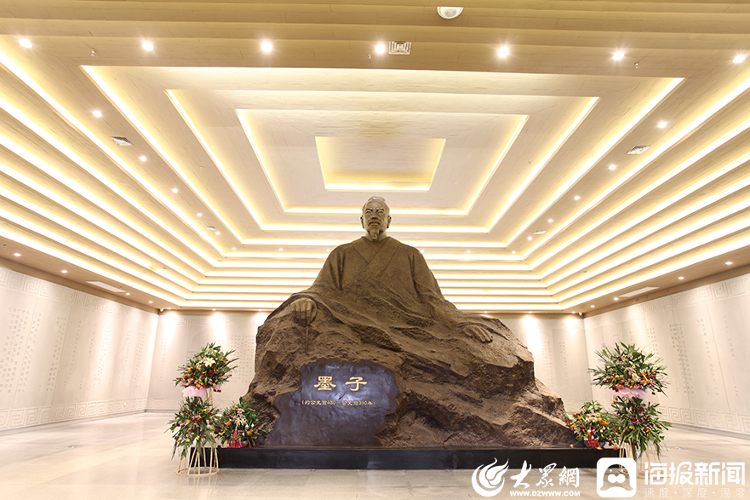
墨子姓墨,名翟(约公元前480年——公元前390年),春秋战国之际思想家、教育家、军事家、科学家、社会活动家,墨家学派的创始人,战国时期小邾国(今山东滕州市)人。墨子是一位学贯文理、注重实践、百科全书式的“平民圣人”。他在力学、数学、光学等方面的某些创见与近代科学原理几乎完全相同,后人尊称墨子为“科圣”。
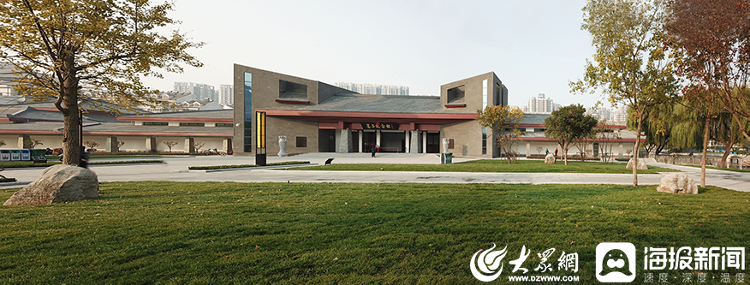
墨子纪念馆坐落于荆河之滨、龙泉塔畔,是目前中国境内唯一一座集墨子文化研讨、墨学图书资料收藏、墨学科技教育和参观游览于一体的综合性庭院式建筑场馆,是国家AAA级旅游景区、国家二级博物馆和全国科普教育基地。
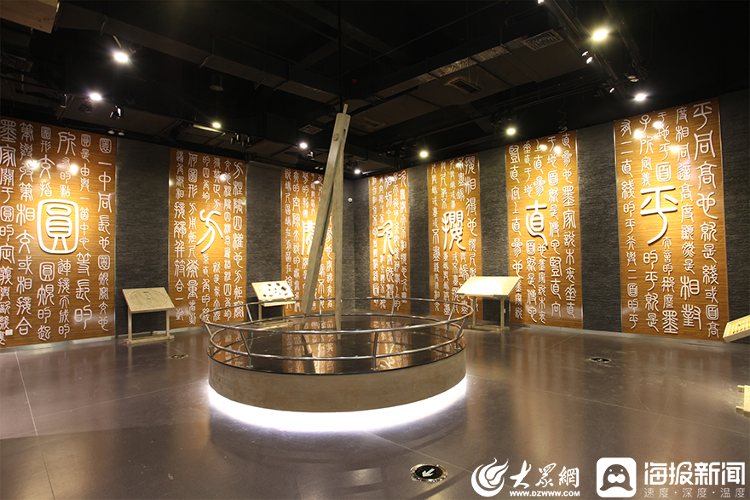
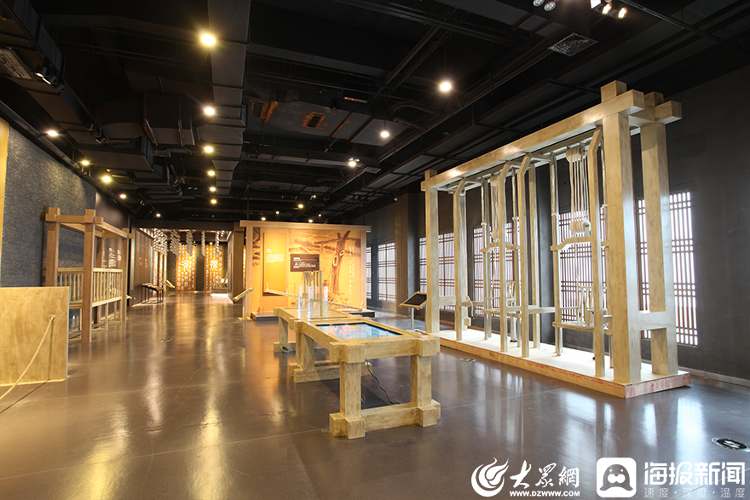
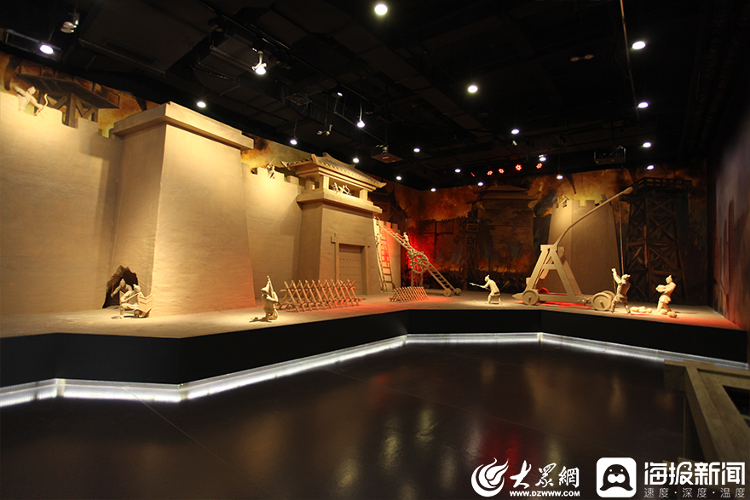
墨子纪念馆始建于1993年,建筑面积5600平方米,设有两堂四厅一院,分别是兼爱堂、圣迹堂、人文厅、科技厅、军事厅、弘墨厅及墨子书院。兼爱堂,主要展示墨子像和名人评墨子; 人文厅,主要展示墨子十大思想主张与墨家哲学成就;科技厅,主要展示墨家在几何学、算学、光学、力学、时空观等方面的成就;军事厅,主要展示墨子军事思想及防御设施;圣迹堂,主要绘有《墨子圣迹图》,展示墨子生平事迹;弘墨厅,展示历届墨学国际研讨会盛况和墨学研究成果。
墨子纪念馆是弘扬中华优秀传统文化、研究墨子思想文化的高雅学术殿堂,是联系中外墨学研究专家学者的纽带桥梁,被誉为“墨研基地,古滕圣府”。
附:墨子主要思想主张及经典故事
墨子的思想博大精深,主要观点为:兼爱、非攻、尚贤、尚同、节用、节葬、非乐、非命等方面。
墨子的核心思想是“兼爱”,“兼爱”就是墨子倡导人与人之间,普遍地、平等地互助互爱;
“非攻”,就是反对大国侵略小国的不义之战;
“尚贤”,即崇尚贤者,任用贤能之士,实现社会治理和天下太平;
“尚同”,是墨子针对当时国家混乱的实际提出的政治纲领,提出要“一同天下之义”;
“节用”,就是厉行节约、反对奢侈浪费;
“节葬”就是反对厚葬久丧、反对杀殉;
“非乐”就是反对统治者耗费民力,为满足自己的享乐欲望组织大型的音乐活动。
“非命”,就是反对“命有天定”,墨子认为事在人为,有志竟成。
墨子平凡而伟大的一生给后人留下了很多脍炙人口的经典故事,如“规矩方圆”“聚徒讲学”“义利统一”“墨守成规”“染山观染”等被后世所传颂。
(规矩方圆):
经过学习与实践,墨子提出了正确的客观标准:“天下从事者,不可以无法仪”,不同的手工业工匠各有特殊的技巧,但都要遵守共同的标准、法则,制方要用矩尺,制圆要用圆规,取直要绷紧墨线,取平要用水平仪,取垂直要用悬挂的垂线,这五种标准,是各类工匠遵从的普遍法则。
(聚徒讲学):
墨子以“兴天下之利,除天下之害”为己任,到处奔走,宣传行义。经过几年的实践,他深感靠一个人的力量不够,必须组织更多的人为义献身。约在三十岁之前,他创办了人类历史上第一个设有文、理、军、工等科的综合性平民学校,培养了大批人オ。史称“弟子弥丰,充满天下”,其学说成为“言盈天下”的显学。
(义利统一):
墨子在对弟子讲解义与利的关系时指出:“万事莫贵于义。”为义就是要“兴天下之利,除天下之害”,把“国家百姓人民之利”作为衡量价值高低的标准。要“兼相爱、交相利”,做到“兼而爱之,从而利之”。他用利来规定义的内涵,把仁、义和爱的道德观念同功利直接联系起来,表现了义利统一和重视功利的思想。
(墨守成规):
“墨守成规”成语源于墨子。“墨守成规”现义形容思想保守,不思进取。而原意却是墨子因善于守城著名,“墨守”既为“善守”,墨家守城之道成为一定的规则,规章,弱小国家采用墨子的这套规章守城,可以做到万无一失。这是原有的字面意思,发展到现在就全都变了,成了贬义词。
(染山观染):
墨子与几位弟子漫游染山。他看到染丝的情景感慨万千,叹息道:“白丝染于青色的染水就变成青色,染于黄色的染水就变成黄色。染水一变,被染的丝的颜色随即改变。”他又从染丝想到环境对人的影响,指出每个人不论职位高低,都必须慎重选择与自己相处的人,并希望创建优美的文化环境,以促进社会的进步。
Mozi, whose name was Modi, lived around 480 BC to 390 BC. He was a philosopher, educator, strategist, scientist, and social activist during the Spring and Autumn period and the Warring States Period. He lived in the kingdom of Xiaozhu (now Tengzhou city, Shandong Province). Mozi was an encyclopedic “Saint of the Common People”, who studied arts and science, and emphasized on practice. Some of his pioneering ideas in mechanics, mathematics and optics are almost identical with the principles of modern science, so the later generations honor him as “Ke Sheng(the Saint of Science and Technique)”.
Mozi Museum is located on the bank of Jinghe River and besides to Longquan Tower. It is the only comprehensive courtyard building in China which integrates with Mohist culture discussion, books and reference materials collection, science and technology education and visiting. It is a national AAA level tourist attraction, a national second-level museum and a national popular science education base.
Mozi Museum was built in 1993 with a construction area of 5,600 square meters. It consists of the Hall of Jianai(Universal Love), the Hall of Shengji(Sacred Signs) , the Hall of Renwen(Humanities), the Hall of Keji(Science and Technology), the Hall of Junshi(Military Affairs), the Hall of Hongmo(Developping Mohism) and Mozi Academy. The Hall of Jianai, which mainly displays Mozi statues and celebrities’ comments on Mozi. The Hall of Renwen mainly displays Mozi’s ten ideas and achievements in Mohist philosophy. The Hall of Keji mainly displays Mohist achievements in geometry, arithmetic, optics, mechanics, space-time and other aspects. The Hall of Junshi mainly displays Mozi’s military thoughts and defense facilities. The Hall of Shengji, with the Painting of the Sacred Relics of Mozi, mainly displays the life story of Mozi. The Hall of Hongmo, showcases the grand occasions of international seminars and research achievements on Mohism.
Mozi Museum is an elegant academic palace to carry forward the traditional culture of Chinese Nation and study Mozi’s thought and culture, as well as a bridge to connect Chinese and foreign experts and scholars in the study of Mohism. It is known as “the Base for the Study of Mohism and the Holy Palace of Time-honored Tengzhou”.
The Main Ideas and Classic Stories of Mozi
The thought of Mozi is broad and profound. His main point of view is: “Jian ai”(Universal Love), “Fei gong”(Against Military Aggression), “Shang xian”(Elevate the Worthy), “Shang tong”(Conform Upward), “Jie yong”(Moderation in Expenses), “Jie zang”(Moderation in Burials), “Fei yue”(Against Music), “Fei ming”(Against Fatalism), and so on.
Mozi’s core idea is “Jian ai”(Universal Love). Mozi advocates the universal, equal, mutual assistance and love among people.
“Fei gong”(Against Military Aggression) is to oppose the ill-willed war, which is the invasion of small countries by big countries.
“Shang xian”(Elevate the Worthy), that is, advocating the sage, appoint the wise man, to achieve social governance and peace in the world.
“Shang tong”(Conform Upward), a political program of Mozi, in response to the countries’ chaos at that time, by which to propose “the uniform righteousness” of the world.
“Jie yong”(Moderation in Expenses) is to practice austerity, oppose extravagance and waste.
“Jie zang”(Moderation in Burials) is against lavish funeral, against the killing of martyrs.
“Fei yue”(Against Music) is to oppose the spending of people’s efforts to satisfy the rulers’ desire by enjoying the organization of large-scale musical activities.
“Fei ming”(Against Fatalism) is to oppose destiny. Mozi advocates man’s hard work and ambition.
The ordinary but also great life of Mozi has left many popular classic stories, such as, Gui Ju Fang Yuan(on standards), Ju Tu Jiang Xue(teach and lecture), Yi Li Tong Yi(the unity of righteousness and benefit), Mo Shou Cheng Gui(formularism), Ran Shan Guan Ran(dyeing and environment).
Gui Ju Fang Yuan(on standards)
After learning and practice, Mozi put forward the correct and objective standards: “No matter what kind of business one is engaged in, one must have standards”. Different craftsmen have special skills, but they should abide by the common standards and laws. They draw squares with a rectangular ruler, circles with a pair of compasses, straight lines to the tighten ink line, horizontal line with a level, and a perpendicular to the hanging vertical line. These five standards are the general law that all kinds of craftsmen should comply with.
Ju Tu Jiang Xue(teach and lecture),
Mozi takes it as his duty to “promote what is beneficial and eliminate what is disastrous to the people in the world”. he run around and preach. After several years of practice by himself, he felt that he was not influencial enough and had to organize more people to devote to the idea. About the age of thirty, he founded the first comprehensive civilian school in human history with arts, science, military, engineering and other subjects, and trained a large number of people. Historian recorded that “his disciples increase, full of the world”, and his doctrine spread to the world, and became a famous school.
Yi Li Tong Yi(the unity of righteousness and benefit)
Mozi said “Of all the things in the world, nothing is more valuable than righteousness”, while explaining the relationship between righteousness and benefit to his disciples. Practicing righteousness is to “promote what is beneficial and eliminate what is disastrous to the people in the world”, and takes “national and people’s benefits” as the standards of a measure. The goal of “universal love and mutual benefit” by showing universal love to all the people, and then benefitting them should be achieved. He used the benefit to define the connotation of righteousness, and directly linked the moral concept of benevolence, righteousness and love to utilitarianism, showing the unity of righteousness and benefit, and his attaching importance to utilitarianism.
Mo Shou Cheng Gui(formularism)
This idiom comes from Mozi. Its present meaning is to describe the idea of conservative, not thinking ahead. But its original meaning is that Mozi was good at and famous for guarding city. “Mo Shou” means “good at guarding”. The way of Mohist guarding city becomes certain rules. The weak small countries could adopt this set of rules to guard their cities, and could meet the standard of zero tolerance. This was the original literal meaning. But now, its meaning has changed to derogatory.
Ran Shan Guan Ran(dyeing and environment)
Mozi and several disciples roaming Ran Shan(dyeing mountain). He saw the scene of dyeing the silk and sighed: “White silk dyed in cyan water becomes cyan, and in yellow water becomes yellow. As soon as the color of water changes, the color of the silk changes.” Thoughting of the impact of the environment on people, he points out that everyone, regardless of their position, should carefully choose the people they live with, and so a beautiful cultural environment should be built to promote social progress.

 海报热榜
海报热榜
 相关推荐
相关推荐